Cedar Pride Wreck in Aqaba: The Complete Diving Guide
The Cedar Pride is one of the most recognizable shipwrecks in Aqaba, Jordan. Resting beneath the Red Sea, this former cargo vessel has become an artificial reef covered in corals and surrounded by marine life. Whether you enjoy wreck photography, exploring underwater history or discovering the Red Sea with a local dive guide, the Cedar Pride deserves a place on your Aqaba diving itinerary.
Book a Cedar Pride Dive Explore the Dive SiteQuick answer: The Cedar Pride is a former Lebanese cargo ship that was intentionally sunk off Aqaba in 1985. Today, it is a popular recreational wreck dive with coral-covered structures, opportunities for wide-angle photography and marine life around the hull. The site reaches approximately 27 metres, so your certification, experience, gas supply and dive plan should determine which parts you visit.
1. The History of the Cedar Pride Wreck
The Cedar Pride began life as a commercial cargo vessel. After a fire damaged the ship in 1982, it was later deliberately sunk off Aqaba in 1985, during the reign of King Hussein, to create an underwater attraction and artificial reef.
Since then, the ship has become an important part of Aqaba’s diving identity. Its hull and superstructure provide a striking underwater landscape, while corals and other marine organisms have gradually colonized suitable surfaces.
Unlike a natural reef, the wreck combines the shape of a large ship with the textures and colors of a living marine environment. That combination makes it especially appealing to divers interested in maritime history and underwater photography.
2. Where Is the Cedar Pride and How Deep Is It?
The wreck lies off Aqaba’s southern coastline in Jordan’s Red Sea. Official local tourism information places it approximately 180 metres offshore and lists a depth range of around 10–27 metres. The ship rests on its port side across two reef areas.
Parts of the wreck are relatively shallow, while the deeper sections require appropriate training and careful monitoring of depth, bottom time and remaining gas. The maximum depth you can safely visit depends on your certification, recent experience and the conditions on the day.
3. What Can You See Underwater?
The Hull and Superstructure
The outline of the ship makes a memorable underwater scene. Observe the hull from the planned route and notice how light and shadows change around its structure.
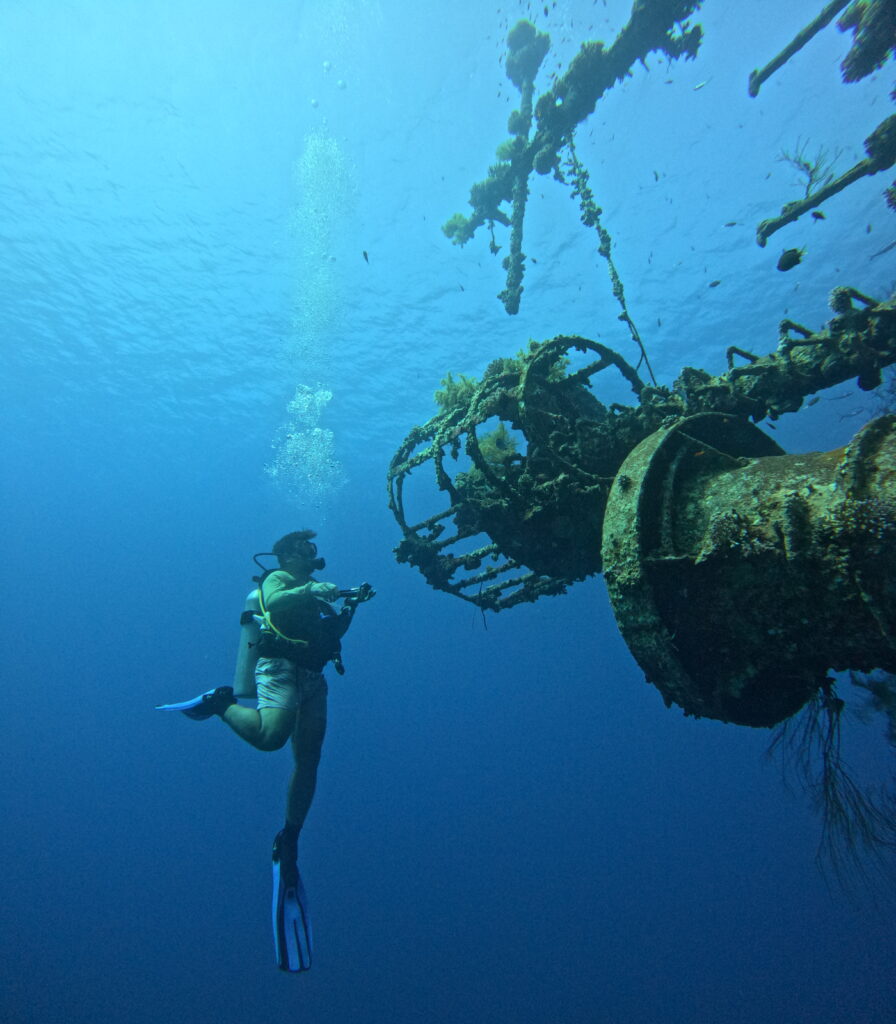
The Mast and Crow’s Nest
Coral growth on the ship’s elevated structures creates distinctive photographic subjects against the blue water. Keep sufficient distance to avoid damaging fragile growth.
Corals and Sea Fans
Hard corals, soft corals and sea fans add color and texture to the wreck. Look closely without touching or resting equipment against them.
Marine Life
Depending on conditions and the season, you may see reef fish, lionfish, moray eels, crustaceans and other small animals using the wreck as habitat. Sightings are never guaranteed.
4. Is the Cedar Pride Suitable for Beginners?
Some shallower sections can be appropriate for suitably qualified recreational divers, depending on the dive plan and conditions. However, the Cedar Pride is not automatically a beginner dive simply because part of the wreck lies at 10 metres.
Newly certified divers should discuss their recent experience, buoyancy control and comfort in open water with their instructor or guide. A shallower route that stays outside the wreck may be more appropriate than a deep or complex route.
- Newly certified divers: Ask about a conservative, no-penetration route within your training limits.
- Experienced recreational divers: Plan the route around your certification, depth limits and gas management.
- Wreck enthusiasts: Discuss a suitable guided dive and the training needed for any overhead environment.
- Underwater photographers: Prioritize buoyancy, awareness and a route that leaves room to frame images without contact.
Explore our certified fun diving in Aqaba or ask about the PADI Advanced Open Water course if you want to build experience with a qualified instructor.
5. Can You Enter or Swim Through the Wreck?
The Cedar Pride has openings and structural spaces that may look tempting to explore. However, entering a wreck is fundamentally different from swimming around its exterior. Overhead environments introduce risks such as entanglement, silt, restricted exits and loss of direct access to the surface.
Do not enter enclosed areas or attempt penetration simply because an opening is visible. Wreck penetration should only be considered by divers with appropriate specialist training, suitable equipment, a planned route and direct guidance from a qualified wreck-diving professional. Some areas may be unsuitable for entry altogether.
6. Best Photography Opportunities at the Cedar Pride
The wreck is a rewarding subject for both wide-angle and close-up underwater photography. Its long profile, structural details and coral growth offer a variety of compositions.
- Wide-angle images: Frame the ship against open blue water, with a diver providing scale when appropriate.
- Coral details: Look for colorful growth on the exterior, taking care not to touch or damage it.
- Natural light: Experiment with the sun's direction and the contrast between the wreck and the water column.
- Close-up subjects: Search for small reef animals only when you can maintain stable buoyancy and avoid disturbing them.
- Respectful positioning: Never hold onto the wreck, stand on the seabed or block another diver’s route for a photograph.
A dive guide can help you select a route that matches your experience and photography goals. Bring a camera only if you can manage it without compromising buoyancy or awareness.
7. When Is the Best Time to Dive the Cedar Pride?
Aqaba offers diving throughout much of the year. Water temperature, visibility, wind and surface conditions change seasonally and can vary from day to day. There is no single month that guarantees the best conditions at the Cedar Pride.
Spring and Autumn
These seasons can offer comfortable diving conditions. Check the forecast and ask your local dive center about the day's visibility and exposure protection.
Summer
Warmer water can make longer surface intervals comfortable, but sun protection and hydration remain important.
Winter
Diving remains possible, but cooler water and wind can affect comfort. Suitable exposure protection is important.
Day or Night
Day dives are ideal for viewing the wreck's overall shape. Night dives offer a different atmosphere and may reveal nocturnal animals, when planned and supervised appropriately.
8. Shore Diving or Boat Diving?
The Cedar Pride is relatively close to shore, and local information describes access by either shore or boat. The best option depends on the entry and exit conditions, sea state, the operator's plan and your preferences.
Shore Dive
A shore dive may suit divers who prefer a land-based entry and a planned swim to the wreck. The entry, exit and distance should be assessed on the day.
Boat Dive
A boat can provide a convenient alternative when the operator considers it appropriate. Ask about the planned drop-off, pick-up and surface support.
Read about our boat diving trips in Aqaba and daily diving programs to explore your options.
9. What Should You Bring?
- Your diving certification and logbook, if available.
- A dive computer and exposure protection appropriate for the conditions.
- Suitable mask, fins and boots; rental equipment may be available through your dive center.
- An underwater camera, if you can use it without compromising safe diving.
- Drinking water, sun protection and dry clothes for after the dive.
- Any personal equipment required for your training, comfort or medical needs.
Before the dive, review the briefing, planned maximum depth, gas management, buddy procedures, entry and exit plan, and what to do if separated from your group.
10. Responsible Diving Around the Wreck
The Cedar Pride is both a wreck and a marine habitat. Responsible diving helps protect the coral growth and animals that make the site special.
- Maintain neutral buoyancy and keep fins clear of the wreck and reef.
- Never collect, break, feed or deliberately disturb marine life.
- Do not remove objects from the wreck or leave anything behind.
- Keep a safe distance from fragile coral, sea fans and other divers.
- Follow local marine-park rules and your guide's instructions.
Learn more about the region through our complete guide to diving in Aqaba.
11. Plan Your Cedar Pride Dive with Aqaba Moon Diving Center
Exploring the Cedar Pride with a local dive team helps you plan a route suited to your certification, experience and interests. At Aqaba Moon Diving Center, we can discuss your preferred diving style, equipment needs and whether shore or boat access is appropriate for the conditions.
Tell us if you are interested in wreck photography, a recreational exterior tour or a night dive. We can help you decide on an appropriate plan before confirming your booking.
Ready to Explore the Cedar Pride?
Discover one of Aqaba's best-known wrecks with Aqaba Moon Diving Center. Contact our team to discuss your experience level, preferred date and diving options.
Contact Us on WhatsApp Cedar Pride Dive DetailsAqaba Moon Diving Center • Aqaba, Jordan • +962 79 3004054
Frequently Asked Questions
How deep is the Cedar Pride wreck?
The wreck is commonly described as lying between approximately 10 and 27 metres. The exact depth reached depends on your route and dive plan.
When was the Cedar Pride sunk?
The former cargo ship was intentionally sunk off Aqaba in 1985 to create an underwater attraction and artificial reef.
Can Open Water divers visit the Cedar Pride?
Some shallower exterior routes may be appropriate for qualified Open Water divers, depending on conditions and experience. Your guide should choose a route within your certification and training limits.
Can I enter the Cedar Pride wreck?
Do not enter enclosed wreck spaces without appropriate specialist training, equipment and a suitable plan. Exterior diving can be rewarding without penetration.
Is the Cedar Pride accessible from shore?
Yes, the site is described as accessible from shore or by boat. The safest access method depends on sea conditions and the dive operator's assessment.
What marine life can I see?
Possible sightings include reef fish, lionfish, moray eels and small invertebrates among coral growth. Wildlife sightings vary and cannot be guaranteed.
Can I do a night dive at the Cedar Pride?
Night diving may be possible with an appropriately planned and supervised dive. Your experience, equipment, local conditions and operator's assessment determine suitability.
How do I book a Cedar Pride dive in Aqaba?
Contact Aqaba Moon Diving Center through WhatsApp at +962 79 3004054. Share your certification, recent diving experience and preferred date so the team can discuss suitable options.

Ready to Dive?
Let’s plan your next underwater adventure in Aqaba!